Apple & Gemini: What This Deal Means for the Future of AI
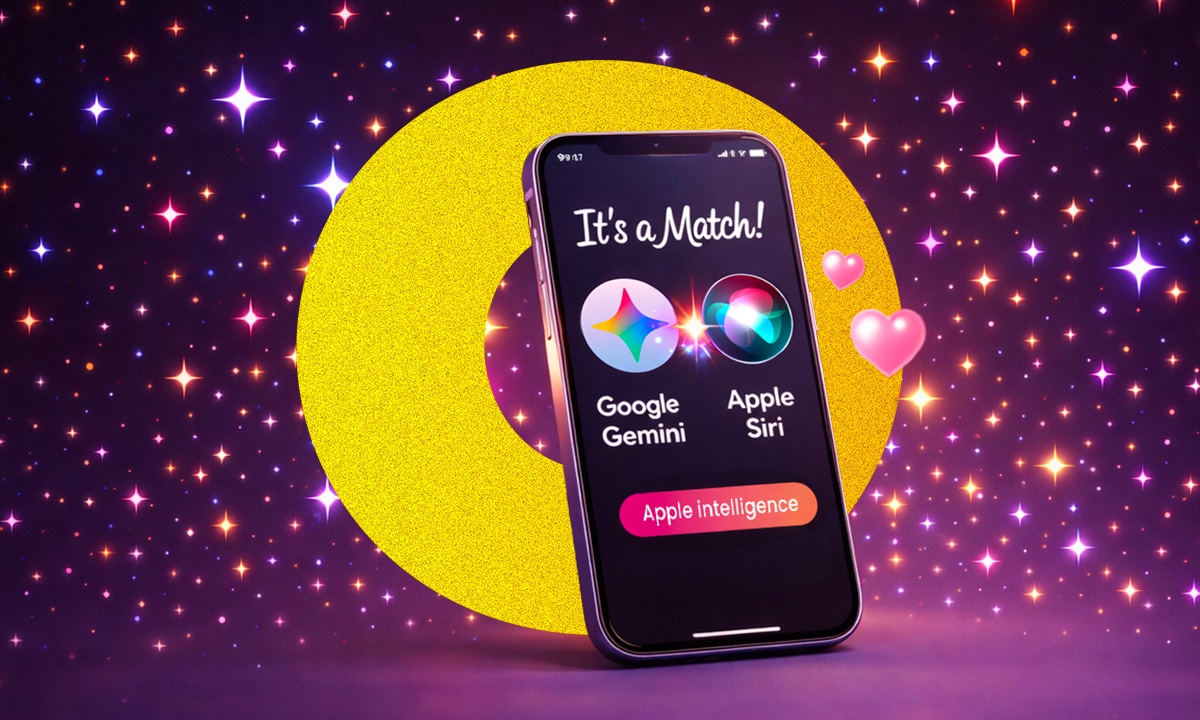
On January 12, Apple made a move that did not go unnoticed. The company signed a multi-year agreement with Google to provide the brain behind Siri. Put that way, it lands with some force. And yet, this choice says a lot about the real state of the race in artificial intelligence and about what is starting to shift in 2026.
In collaboration with David Hamel, Tech Hub Leader
First, it is important to fully grasp what this represents for Apple. This is the first time the company has outsourced such a fundamental technological layer. Siri is not a secondary feature, it is the voice interface at the core of the user experience. Even with more than 130 billion dollars in cash on hand, Apple has not been able to build a sufficiently competitive model on its own. It is not a question of money, but of structure.
One of the reasons lies in its “Privacy First” philosophy. By refusing to collect certain data, Apple deprives itself of the fuel that allows other players like Google or OpenAI to train their large language models. On top of that comes the loss of AI talent, a very real issue in the tech industry. We need more talent, and we need to retain it. Candidates are rare, volatile, and demanding, not in terms of money, but in terms of the quality of work, their ability to operate at the state of the art, and the freedom of action and innovation they are given.
Another striking element in this announcement is OpenAI’s refusal to integrate ChatGPT as Siri’s engine. Rather than becoming an invisible building block within someone else’s ecosystem, OpenAI chose a riskier path. That of developing its own hardware with Jony Ive, a former Apple executive. In their view, owning the final interface, the one the user interacts with, is worth more than quietly powering someone else’s interface. It is a long-term bet, deliberate and consistent with their vision.
The Return of a Familiar Apple-Google Dynamic
This new collaboration between Google and Apple brings back memories of another era. In the early 2000s, the two companies worked closely together. Apple controlled the hardware and software ecosystem of its devices, while Google provided the default search engine. At the time, the paradigm was simple. Google had the best search software, Apple had the best platform.
Today, we are seeing a return to a similar dynamic. Siri is clearly behind Gemini, ChatGPT, and other assistants. Apple is losing ground on the experience of interaction between AI and physical devices, and that gap is not trivial. Even as services take up more space, a significant share of Apple’s revenue still depends on device sales. If the complete experience shifts elsewhere, users could follow.
For Google, the benefit is immediate. Improving the AI experience on Apple devices generates direct revenue, without waiting for a gradual user conversion. It also provides access to extremely large volumes of data. Google is making a long term bet here while capturing quick wins.
Apple, for its part, continues to bet on the device as the central pillar. In the medium term, it is reasonable to think that its objective remains to develop autonomous AI capabilities. But the obstacles are numerous, whether related to talent, regulatory frameworks, or the relentless pace of technological advances. In the short term, this partnership looks more like a defensive move for Apple. For Google, it is a neutral, if not offensive, positioning.
The history between Apple and Google is marked by back-and-forth between collaboration and competition. After a period of tension between 2017 and 2020, we are now seeing a phase of easing. But competition will inevitably return. Because control over the interaction between users and data is a fundamental issue. Apple is extremely firm on this point. Google is too, in its own way.
From Generative AI to Agentic AI
But the most structuring point lies elsewhere. We are in the process of moving from generative AI to agentic AI. We are leaving behind the moment when AI was limited to answering questions or generating text. With agentic AI, the system receives as input either a user request or a notification from another system, determines the appropriate course of action based on that information, breaks it down into sub-tasks, mobilizes multiple agents (each with access to different applications or data sources), and then executes actions autonomously. This is referred to as an orchestration of agents, with a level of autonomy that continues to increase.
And this is where the agreement between Apple and Google becomes revealing. It shows that no company, even an extremely wealthy one, can move forward alone at this pace. The real constraint is talent and the ability to keep up with technological momentum. It also shows that model providers like OpenAI are increasingly looking to vertically integrate their offerings. And above all, it confirms that the core of the debate is now centered on agentic AI.
Beyond this specific partnership, this shift reflects a broader reality. Companies, across all industries, are also experiencing a moment of rupture. Adapting to AI is moving from a theoretical issue to an operational one. Systems capable of interacting with AIs like ChatGPT will see their usage explode. Organizations will need to prepare by offering open microservices that can be easily consumed by these new agents.
At the same time, security will need to be rethought. Controlling malicious agents (or teams of agents), protecting against new forms of attacks, and securing these systems will become priorities. In the short and medium term, use cases such as consulting a flight database or booking a trip between two cities through a proprietary AI assistant at Apple or Google will no longer be marginal innovations, but real user expectations.
This is the kind of shift we can see taking shape. And it is coming faster than we think.
Written by
-

Philippe Harel
Leader Data & IA