Insights
Filter by publication type
78
-

FinOps AI: The discipline that links each token to a result
Article
AI FinOps shifts from measuring costs to measuring value. Why “cost per outcome” is becoming the key executive metric.
-
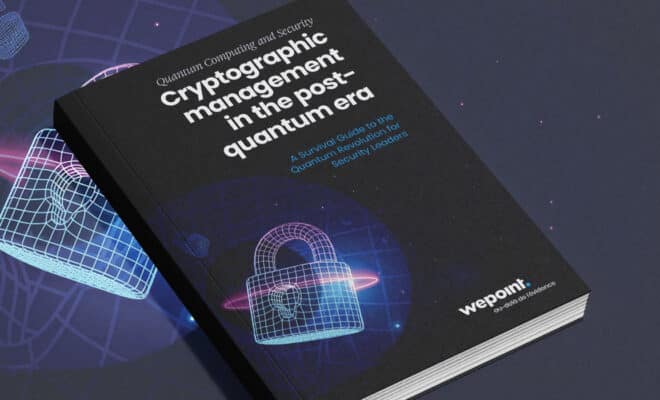
Cryptographic Management in the Post-Quantum Era
White paper
Learn how to anticipate quantum risks, protect your data, and prepare your organization for the transition to post-quantum cryptography.
-

5 Key Takeaways from ALL IN 2026
Article
Between the strengthened partnership with Germany, the investment in LawZero, and the national AI literacy initiative, five major workstreams emerged from the conference, outlining the conditions required to industrialize AI across your organization.
-

Hypervelocity Data Intelligence: When Speed Becomes an Architectural Constraint
Article
Discover how hypervelocity is transforming data intelligence to create more adaptable, well-governed, and sustainable platforms.
-

Expérience Inédite – The Future of Human Intelligence in the Age of AI
Podcast
In this new episode of the Expérience Inédite podcast, we welcome Delphine Le Serre, Founder and President of the EdHu2050 Foundation and Co-Founder of the HUMANE.S Summit.
-

From IAM to ANS: How DNS Aims to Secure the Era of Autonomous Agents
Article
Verifiable Identity, Access Control, Observability: The Fundamentals of Zero Trust Governance for Autonomous AI Agents
-

Cybersecurity: How can organizations build lasting digital trust in an environment transformed by AI?
Article
Explore our summer series to discover how to strengthen your security in an environment more exposed, more connected and transformed by AI.
-

Artificial Intelligence: How can organizations move from experimentation to real-world deployment?
Article
Moving artificial intelligence from experimentation to deployment requires aligning architecture, governance, processes, and information systems.
-

Digital Sovereignty: How can organizations regain control over critical dependencies in the age of AI?
Article
We help organizations regain control over the technological, industrial, and information dependencies that constrain them.