Cybersecurity: How can organizations build lasting digital trust in an environment transformed by AI?
As part of our summer series, this page highlights an issue that has become critical: securing organizations over the long term in an environment that is more exposed, more connected, and profoundly transformed by AI.
Digital trust cannot simply be declared. It must be built through a cybersecurity strategy designed to protect data, secure information systems, and strengthen the organization’s operational resilience.
Risks related to AI agents, unauthorized use, the software supply chain, information system resilience, and critical capabilities are reshaping the challenge. Organizations must now go beyond protection to ensure continuity, control, and robust use without slowing innovation.
Explore our summer series on cybersecurity
-

GTG-1002: The New Face of Cyber Threats
Delinea and Wepoint brought together cybersecurity leaders in Montreal for an executive summit focused on a question that has become impossible to ignore: How do we fight cybercrime in the age of agentic AI?
-
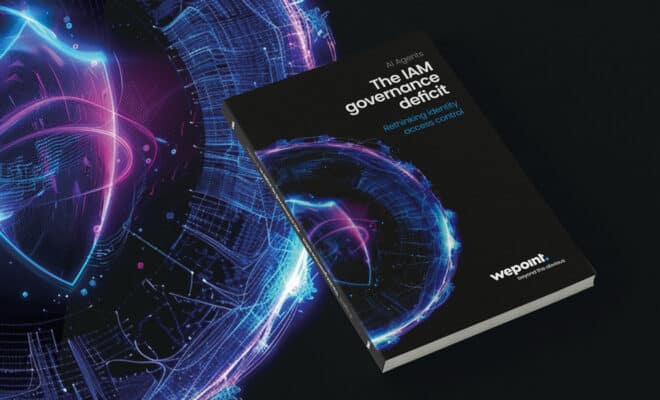
AI Agents: the new invisible challenge for your IAM
Find out why traditional IAM models fail when facing autonomous agents, and how to regain control before the risks become critical.
-

Convergence & Acquisition: Why Is the Cyber and IAM Technology Market Currently So Dynamic?
It’s not only in the kingdom of AI that checkbooks have been wide open in recent years. In cybersecurity as well, acquisitions are happening at a sustained pace.
-

Do we still need passwords?
During the MTL Connecte 2025 event organized by Printemps Numérique, our cybersecurity leader Emmanuel Sol took part in the panel “Simplifying Access, Amplifying the Human: The Impact of Modern Authentication.”
-

Chicago by Saviynt: From Skepticism to a Real Value Demonstration of Agentic AI
When it comes to artificial intelligence, I consider myself more of a skeptic. Not skeptical in the sense that I doubt its existence, that would be fake skepticism. Rather, I am skeptical because the term has been widely overused.